SACE Certificate: How to Get, Download, Replace and Use It
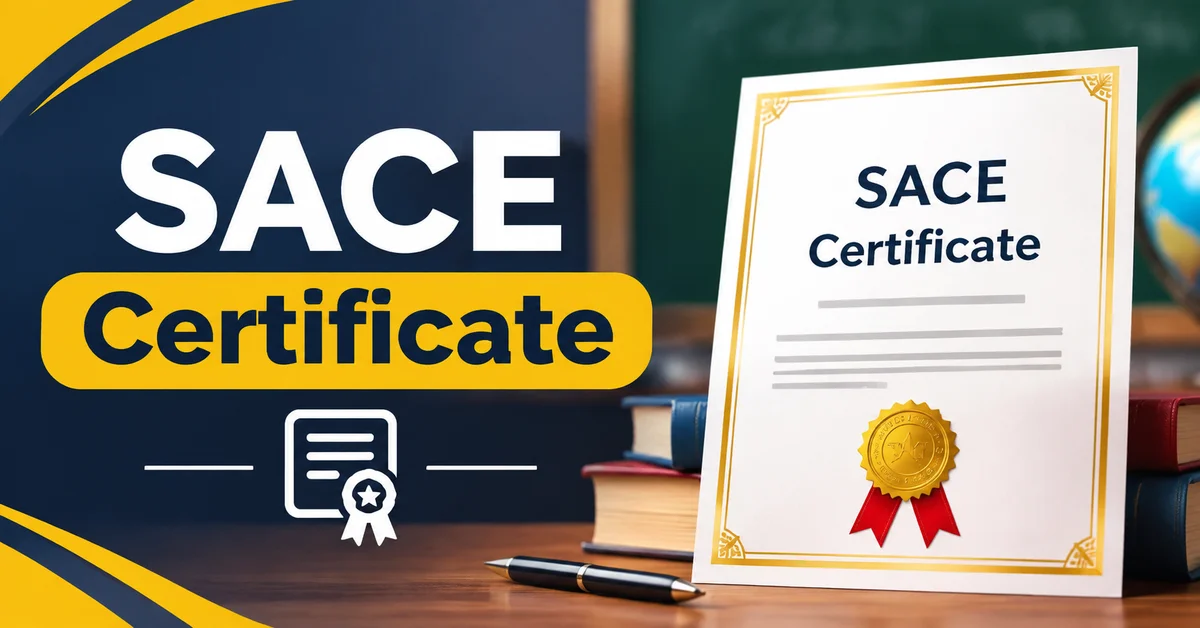
A SACE certificate is the official proof that you are registered with the South African Council for Educators. It shows your name, your unique SACE registration number and your registration category. You can usually get it after your registration is approved, by logging in through www.sace.org.za or by requesting it from SACE. Schools and education departments regularly ask for it when you apply for teaching posts.
This guide explains what the certificate shows and how to get or download it. It also covers how to use it in job applications, how to replace a lost one and how to update it after a name change or an upgrade. SACE’s exact process may change, so confirm the current steps on its official website.
SACE Certificate at a Glance
| Question | Short answer |
|---|---|
| What is it? | Official proof of SACE registration |
| What does it show? | Typically your name, SACE number and registration category |
| When do I get it? | After SACE approves your registration |
| How do I get it? | Through your SACE online profile where available, or by requesting it from SACE |
| Lost it? | Request a replacement or download a new copy; no need to re-register |
| Name changed? | Update your SACE record, then request an updated certificate |
| Upgraded from student to full? | Make sure you get a certificate showing full registration |
SACE tool
SACE Certificate Replacement Guide
Step by stepLosing your certificate does not cancel your registration — you stay on the register. No Rand amount for the replacement fee is stated in the SACE guides; confirm the amount on the official SACE website.
What Is a SACE Certificate?
A SACE certificate is the document SACE issues to confirm that a person is on its register of educators. It is your formal proof of professional registration as a teacher in South Africa. It’s similar to the practising certificates other professional councils issue to their members.
Why It Matters
The SACE Act requires employers to employ only registered educators. Your certificate is the easiest way to prove that you meet this legal requirement. Without it, or at least a SACE number an employer can verify, many schools and provincial departments can’t finalise an appointment.
Certificate vs SACE Number vs Registration
| Term | What it is |
|---|---|
| Registration | Your actual status on SACE’s register of educators |
| SACE number | The unique number SACE assigns to you once you’re registered |
| SACE certificate | The document that records your registration and shows your SACE number |
Your registration is what counts legally. The certificate is the evidence of it, and the SACE number is the reference that links everything together. If a certificate and SACE’s records ever disagree, SACE’s register is the authoritative source.
What Information Does a SACE Certificate Show?
A SACE certificate typically shows your full name, your SACE registration number, your registration category and the date of registration or issue. The exact layout and fields are set by SACE and may change over time.
| Typical field | Why it matters |
|---|---|
| Full name | Must match your ID so employers can confirm the certificate is yours |
| SACE registration number | Your unique reference for every SACE matter |
| Registration category | Shows whether you are fully, provisionally or student-registered |
| Date of registration or issue | Shows when the registration or certificate was granted |
| Expiry or validity date (for time-limited categories) | Relevant for provisional registration, which is time-limited |
| SACE branding or official marks | Help identify the certificate as genuine |
Check Your Certificate as Soon as You Receive It
- Confirm that your name is spelled correctly and matches your ID.
- Check that the category is the one you applied for.
- Note your SACE number and save it somewhere easy to find.
- If anything is wrong, contact SACE straight away to correct it.
SACE Certificates by Registration Category
Every registered educator receives proof of registration, but what it means depends on the category. A full registration certificate confirms you’re a professionally qualified educator. A provisional certificate shows conditional, time-limited registration. A student educator certificate confirms you’re registered while still studying.
| Category on certificate | What it tells an employer | What to watch out for |
|---|---|---|
| Full registration | You meet the requirements for a professionally qualified educator | Keep it up to date after a name change |
| Provisional registration | You’re registered with conditions, often while completing a qualification | Note the expiry date and upgrade before it ends |
| Student educator | You’re registered while enrolled in teacher education | Upgrade to full registration when you qualify |
Why Employers Look Closely at the Category
Most permanent teaching posts expect full registration. A student educator certificate is useful for teaching practice but is usually not enough for a full appointment. A provisional certificate may be accepted for some posts, depending on the employer and the conditions attached. If your circumstances have changed, upgrade your registration before you apply for posts.
How to Get or Download Your SACE Certificate
- Make sure your SACE registration has been approved. Check your status first.
- Go to www.sace.org.za and log in to your SACE online profile.
- Open the section for your registration, certificate or documents.
- Select the option to view, download or print your certificate or proof of registration.
- Save the file, ideally as a PDF, with a clear name, such as “SACE_Certificate_Nkosi.pdf”.
- Print a copy on good-quality paper if you need a hard copy.
- If there’s no download option, contact SACE and ask how to get your certificate.
When Will I Receive My Certificate?
Usually after your registration is approved. Depending on SACE’s process at the time, you may be able to download it soon after approval, or it may be issued separately. If your status shows “approved” but you can’t find the certificate, give it a little time and then ask SACE.
Saving and Storing It
- Keep a digital copy in your email, cloud storage and phone.
- Store any printed original flat in a document folder.
- Keep your SACE number in your CV and phone notes.
- Get certified copies made whenever you need to submit hard copies, rather than handing over the original.
How to Use Your SACE Certificate
You’ll use your SACE certificate mostly to prove your registration when you apply for teaching posts, during appointment and HR processes, and whenever an institution needs to confirm that you’re a registered educator. Usually you submit a certified copy or a scan, not the original.
When You’ll Need It
| Situation | What’s usually asked for |
|---|---|
| Applying for a post on a provincial vacancy list | A certified copy of your SACE certificate, or your SACE number |
| Applying to an independent school | A copy of your certificate and your SACE number |
| Starting a new post (appointment and HR) | A certified copy for your personnel file |
| Applying for promotion posts | Proof of current registration |
| Further studies or certain bursaries | Sometimes proof of registration as a practising educator |
| Teaching abroad later | Sometimes proof of good standing with SACE |
Including It in a Job Application
- Put your SACE number near the top of your CV, under your personal details.
- Attach a recently certified copy of your certificate if the advert asks for one.
- Make sure the name on the certificate matches your ID and other documents.
- If your registration is still pending, say so honestly and give your application reference.
Certified Copies of Your Certificate
When an employer asks for a certified copy, take your original certificate and a photocopy to a Commissioner of Oaths, such as at a SAPS station, to have the copy certified. For online applications, a clear scan of the certified copy is usually acceptable.
Lost or Damaged SACE Certificate: How to Replace It
- Remember that losing your certificate doesn’t cancel your registration. You stay on the register.
- Log in to your SACE profile and check whether you can download a new copy.
- If you can’t download it, contact SACE and ask for a replacement certificate.
- Give your full name, ID number and SACE number.
- Complete any form SACE requires and pay any replacement fee it charges.
- Keep the replacement safely in both digital and printed form.
If You’ve Also Forgotten Your SACE Number
You can usually find it on old payslips, appointment letters or earlier correspondence from SACE. Otherwise, contact SACE with your ID number. You don’t need to register again.
If the Certificate Was Stolen
If your certificate was stolen along with other documents, such as your ID, report the theft to SAPS. Keep the case number and let SACE know when you ask for a replacement. This helps protect you if someone tries to misuse your details.
How to Update Your SACE Certificate
Your certificate should always reflect your current details and registration category. Update it after a name change, after upgrading from student or provisional to full registration, or if it contains an error.
After a Name Change
- Update your name with the Department of Home Affairs first.
- Get certified copies of your new ID and your marriage certificate or name-change document.
- Send them to SACE with your SACE number and ask for your record to be updated.
- Request or download an updated certificate showing your new name.
After Upgrading Your Registration
- Submit your completed qualification documents to SACE for the upgrade.
- Track the upgrade until your status shows full registration.
- Download or request a new certificate showing the new category.
- Replace old copies of your student or provisional certificate in your job application pack.
If There’s an Error on the Certificate
If your name, ID details or category is wrong, contact SACE with proof of the correct information, such as a certified copy of your ID. Don’t alter the certificate yourself. A changed certificate is treated as a forged document.
Verifying a SACE Certificate and Avoiding Fraud
The only reliable way to verify a SACE certificate is to confirm the details with SACE itself, through any verification service listed on its official website or by contacting it directly. A certificate that looks genuine can still be fake or out of date. SACE’s register is the authoritative record.
How Employers Can Verify a Certificate
- Compare the name on the certificate with the candidate’s ID.
- Note the SACE number and registration category.
- Confirm the details with SACE, using the verification method on its official website.
- Check that a provisional registration hasn’t expired.
- Record the verification on the staff file.
Warning Signs of a Fake or Altered Certificate
- Spelling mistakes, inconsistent fonts or poor-quality logos
- A SACE number that SACE can’t confirm
- A registration category or date that doesn’t match the candidate’s qualification history
- Signs of editing, such as mismatched backgrounds or blurred areas around names
Why Certificate Fraud Is Serious
Using a forged SACE certificate is dishonest and can be a criminal offence. It also puts learners at risk, because it bypasses the screening registration provides. Never buy, sell or alter a SACE certificate. If you’re offered a “fast-tracked” certificate for a fee, refuse and report it.
Common SACE Certificate Problems and Fixes
| Problem | Likely cause | Fix |
|---|---|---|
| Status says approved but no certificate is available | Certificate not yet generated, or a separate download step | Check the certificate section; contact SACE if it’s still missing |
| Can’t download the certificate | Browser or pop-up blocker, or a site problem | Allow pop-ups, try another browser or device, try again later |
| Name spelled wrong | Data-capture error | Send SACE a certified copy of your ID and ask for a correction |
| Certificate shows student registration after graduating | Upgrade not done | Apply to upgrade with your final qualification documents |
| Provisional certificate has expired | Conditions not met in time | Contact SACE urgently about your options |
| Employer won’t accept a scan | The employer requires a certified copy | Have a copy certified by a Commissioner of Oaths |
| Certificate lost | Misplaced, damaged or stolen | Download a new copy or request a replacement |
A Practical Example
Ayanda, a Senior Phase teacher in the Eastern Cape, married and changed her surname. Her new ID shows her married name, but her SACE certificate still shows her maiden name. When she applies for a post in a new district, HR queries the mismatch. She sends SACE her new ID and marriage certificate, receives an updated certificate and resubmits her application with matching documents.
Final Word on the SACE Certificate
Your SACE certificate is your official proof of registration as an educator in South Africa, and nearly every teaching application will ask for it. Download or request it as soon as your registration is approved, check every detail and store digital and printed copies safely. Keep it up to date after a name change or an upgrade, and use certified copies when employers ask for them. If it’s ever lost, you don’t need to register again. Simply download a new copy or request a replacement.
Your next step: Log in at www.sace.org.za, download your current certificate, and check that your name and category are correct.
SACE Certificate FAQs
Tap a question to see the answer.
Log in to your SACE online profile through www.sace.org.za and open the certificate or documents section. If no download option is available, contact SACE.
A full registration certificate doesn’t usually carry an expiry date, but you must stay in good standing. Provisional registration is time-limited. Student registration ends being relevant once you qualify.
No. Your university awards your teaching qualification, such as a BEd or PGCE. SACE issues the certificate that confirms you’re registered as an educator.
You can get proof of student educator registration while studying. A certificate showing full registration usually requires proof that you’ve completed your qualification.
Download a new copy from your profile if that option exists, or ask SACE for a replacement with your ID and SACE number. A fee may apply.
Many do, especially for online applications. Some ask for a certified copy, so check each advert’s requirements.
Your SACE number is your unique registration reference. The certificate is the document that shows that number along with your details and category.
It’s better not to. Lamination can make it harder to certify copies or verify the document. Use a plastic sleeve instead.
Your registration remains valid, but the mismatch with your ID can cause delays. Update your details with SACE and request an updated certificate.
Only SACE can do that, through the verification options on its official website or by direct contact.